


5 Common Symptoms of Gluten Intolerance
As the name implies, gluten intolerance is described as an adverse reaction to a protein found in wheat, rye, and barley called gluten. Gluten Intolerance is an umbrella term that integrates three major types of gluten-related disorders: Celiac Disease, Wheat allergy, and Non-celiac gluten sensitivity. To date, there have been more than 55 modern diseases linked to gluten, and it is now recognized as far more common than previously understood. Statistics also suggest that as many as 48...

As the name implies, gluten intolerance is described as an adverse reaction to a protein found in wheat, rye, and barley called gluten. Gluten Intolerance is an umbrella term that integrates three major types of gluten-related disorders: Celiac Disease, Wheat allergy, and Non-celiac gluten sensitivity. To date, there have been more than 55 modern diseases linked to gluten, and it is now recognized as far more common than previously understood. Statistics also suggest that as many as 48 million Americans are currently affected by gluten intolerance, with many potentially having undiagnosed autoimmune disorders like Celiac Disease.
Celiac Disease
The most common form of gluten intolerance is celiac disease. It is an autoimmune disorder brought on by genetic and environmental factors and is estimated to afflict 1% of the world's population. [1] It is induced by foods containing gluten in people who carry a rare cell called DQ8 haplotype. Celiac Disease is characterized not just by gastrointestinal symptoms, but also by extraintestinal manifestations such as dermatitis herpetiformis or Duhring's disease. [2]Wheat Allergy
Allergy to wheat is based on sensitization to wheat protein allergens. This type of allergy is caused by the allergen known as wheat ω5-gliadin which then induces an allergic reaction similar to what bee stings do. [3] The allergy happens within a few hours and fortunately does not cause any permanent organ damage.Non-Celiac Gluten Sensitivity
Intestinal and extraintestinal symptoms characterize Non-Celiac Gluten Sensitivity due to the consumption of food containing gluten in people who are not afflicted by either wheat allergy or celiac disease. [4, 5] Despite its name, recent studies say the protein that triggers the allergy is still yet to be identified, and could in fact not be gluten. [6]The 5 Common Symptoms of Gluten Intolerance
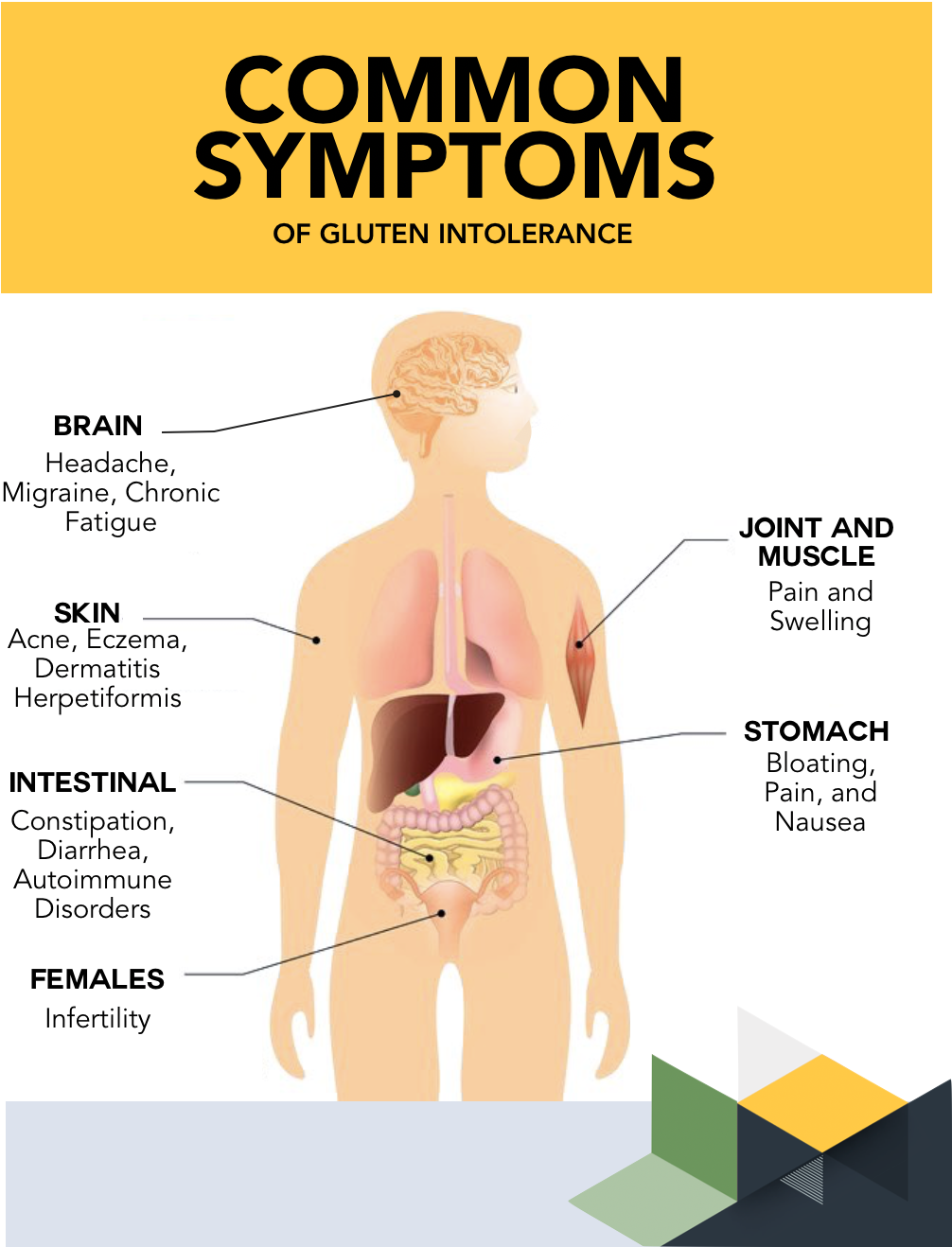
Gluten Intolerance may have three different diseases under it, but they all share similar symptoms, and we describe the five most common symptoms of gluten intolerance below:1. Bloating
Bloating is described as feeling as if your stomach or belly is full of gas after you've eaten. Depending on the severity, some discomfort could be felt. [7] It may seem to be an all too common symptom, but it could indicate that you are sensitive to gluten. [8] In fact, one study shows over 87% of those with suspected gluten intolerance experienced bloating. [9]2. Headaches
Headaches and migraines can affect anyone regardless of how healthy they may be. You can get a headache from too much stress or hitting your head on a hard object. You can also get it a lot f you're gluten intolerant. If you're prone to headaches and migraines and have no real idea why you get them a lot, it may be due to gluten intolerance. [10]3. Chronic Fatigue
While feeling tired is not necessarily linked to any particular disease, having the feeling of always being tired should be looked into by a medical professional especially since it may be linked to what you eat. Studies show that those with gluten intolerance are prone to fatigue, especially after ingesting gluten-containing foods. [11. 12] Gluten intolerance can also cause iron-deficiency anemia which then results in frequent bouts of fatigue. [13]4. Skin Problems
Earlier, we mentioned symptoms of gluten intolerance could manifest themselves externally and one of them is the manifestation of dermatitis herpetiformis, a blistering skin condition. Many physicians refer to it as the skin manifestation of celiac disease. [14] Other skin diseases may also be linked to Celiac Disease. These include psoriasis, alopecia areata, and chronic urticaria.[15-18]5. Autoimmune disorders
Celiac disease is categorized as an autoimmune disease that causes the immune system to treat your digestive tract as a target after consuming foods with gluten. Unfortunately, studies suggest that having Celiac disease makes you much more prone to other autoimmune disorders. [19] This also makes Celiac Disease much more prevalent in people who already have existing autoimmune diseases such as inflammatory bowel disease, type 1 diabetes, and autoimmune liver diseases. [20] The good news is, Non-Celiac Gluten Sensitivity has yet to be linked to an increased risk of acquiring autoimmune disorders. [21]