


Paleo Diet and Autism: Piecing It Together
Autism spectrum disorders (ASD) are characterized by impairment in social interactions, communication deficits, and restricted repetitive interests and behaviors. Gluten-free, Casein-free (GFCF) diets have shown to have a remarkable effect on children with ASD, but some of what I believe to be the most important underlying factors in the etiology of the disorder is still largely unknown. In this article, you will find other possible overlooked factors in autism, the case for the Paleo Diet and...

Autism: The Facts
According to AutismSpeaks.Org: • Autism now affects 1 in 68 children and 1 in 42 boys • Autism prevalence figures are growing • Autism is the fastest-growing serious developmental disability in the U.S. • Autism costs a family $60,000 a year on average • Boys are nearly five times more likely than girls to have autism • There is no medical detection or cure for autism In the 1970s and 1980s, it was estimated by the CDC that one out of every 2,000 children had autism. The alarming increase noted by the Autism Speaks may be due to two factors: one may be due to the expansion of the definition of autism to include a larger collection of brain development disorders such as Asperger’s syndrome, or two, ASD is actually on the rise. Or... perhaps a combination of one and two are happening simultaneously. Either way, if you are anything like me, a little red flag raises in your head anytime you hear about a ‘genetic’ disease that is increasing at a rate that is disproportionate to the population. Despite the widely accepted belief that Autism is a genetic condition, we have to ask ourselves: Is there an environmental trigger at play, as well?Autism: The Obvious Clues
 • Hyperinsulinemia is a precursor to insulin resistance, and Type II diabetes is a condition which is characterized by excess levels of insulin in the bloodstream. But it is apparent in some studies that both Type II Diabetes and autism may share a common underlying mechanism of impaired glucose and hyperinsulinemia. Rice University Biochemist Michael Stern noted that “gestational diabetes was the most important identified maternal risk factor for autism, but that no known mechanism could account for [it].”
 • New research adds to the evidence of a potential link between autism and sensitivities to gluten. The researchers found that elevated antibodies to gluten were significantly more common among children with autism than in the control group. In addition, the elevated antibody levels corresponded to GI symptoms such as abdominal pain and constipation may suggest an underlying mechanism of intestinal permeability or immunological abnormalities in affected children.
 • In this Food Allergy and Infantile Autism study, children with ASD were found to have significantly higher levels of IgA antigen-specific antibodies for casein, lactalbumin, beta-lactoglobulin, and IgG and IgM for casein than those in the control group of 20 healthy children. This may suggest an underlying food allergy or immunological activity associated with caseinates in affected children.
Autism and GI Problems: Overlooked Clues?
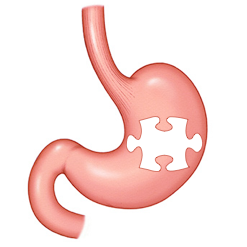 • In this study, increased autism severity is associated with increased GI problems. Parents reported significantly more GI problems in children with ASD, especially those with Full Autism, than in their unaffected children. The study also indicated that increased autism symptom severity correlated with increased severity of GI problems.
• In this study which looked at differences of the gut microflora in ASD children and healthy children, it was noted that of the affected children in the study, many with ASD “had undertaken numerous courses of antibiotic treatment from an early age and suffered from common GI disorders (the most frequent complaints being [diarrhea] and/or constipation).”
• In this study, increased autism severity is associated with increased GI problems. Parents reported significantly more GI problems in children with ASD, especially those with Full Autism, than in their unaffected children. The study also indicated that increased autism symptom severity correlated with increased severity of GI problems.
• In this study which looked at differences of the gut microflora in ASD children and healthy children, it was noted that of the affected children in the study, many with ASD “had undertaken numerous courses of antibiotic treatment from an early age and suffered from common GI disorders (the most frequent complaints being [diarrhea] and/or constipation).”
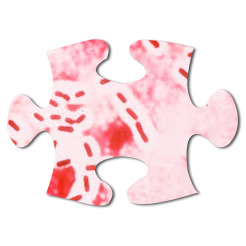 • In this study that investigated the microflora of autistic children and control children, Finegold et al. found several differences between the two groups, including higher levels of gram-negative Firmicutes, Desulfovibrio species, and Bacteroides vulgatus in the severely autistic groups, with depressed levels of the gram-positive, regulatory, and indigenous Bifidobacterium.
• In this 2005 study of the fecal flora of ASD patients by the School of Food Biosciences at the University of Reading, Whiteknights, it was discovered that ASD patients had a statistically significant higher incidence of the bacteria Clostridium histolyticum than that of healthy children.
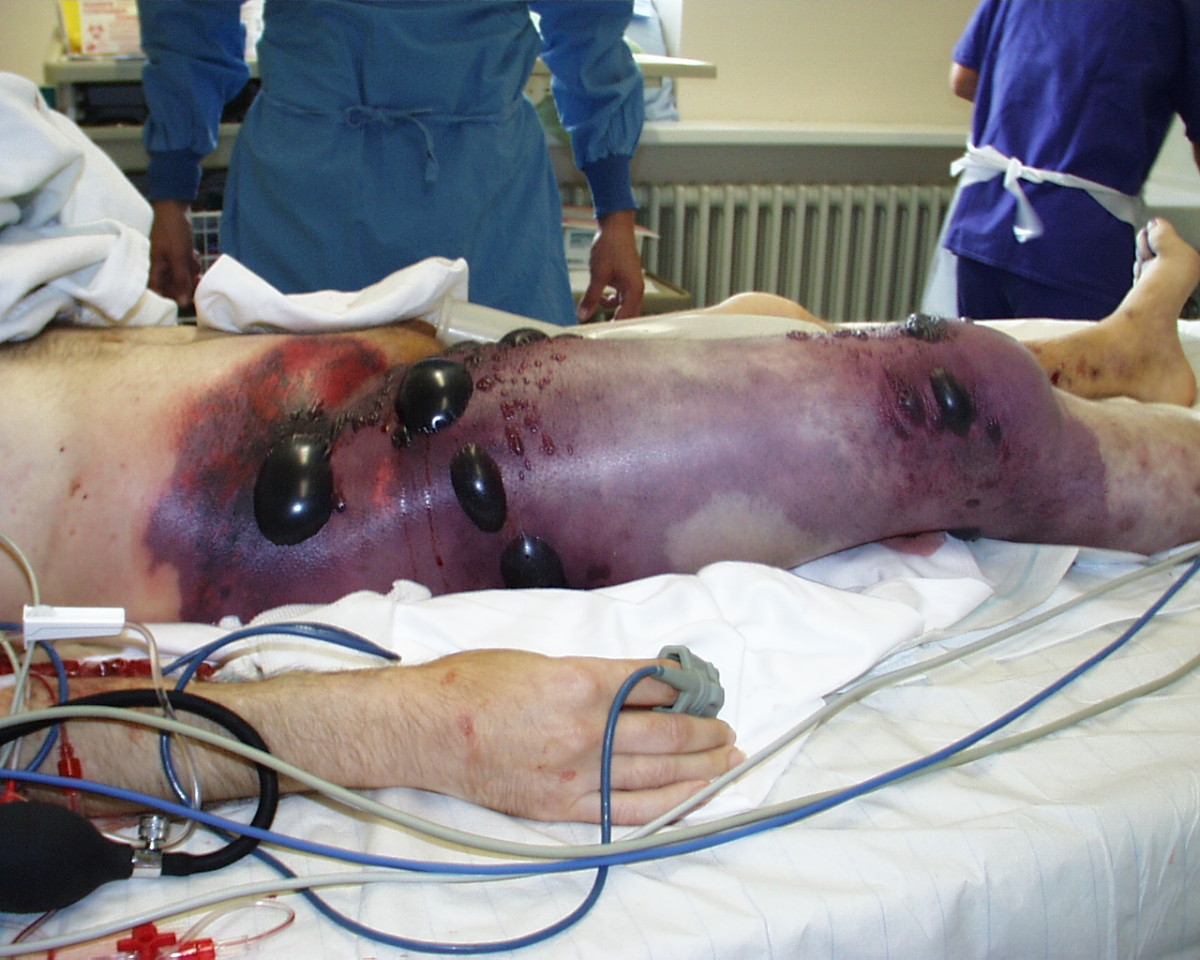
• C. histolyticum is a gram-negative species of bacteria that are pathogenic in humans, and has been shown to be a cause of gas gangrene (click here to see what that looks like). C. histolyticum bacteria are also known as toxin producers and contributors to gut dysfunction. This study shows that the toxigenicity of the C. histolyticum is directly related to its spore-forming abilities. The higher the spore-forming ability, the more toxigenic the strain. It is also noted in this study that toxigenic strains have a greater growth potential than nontoxigenic strains.
• Clostridia groups also produce spores. Clostridia spores are impervious to most antibiotic treatments and can even withstand environmental assaults like high temperature, high UV irradiation therapies, and chemical damages.
• Clostridia groups are propionate producers. And although there have been no human studies with propionates and how that correlates to autistic symptoms, in vivo studies have indicated that injecting propionate into rats caused significant behavioral problems.
• Treatment studies using the antibiotic vancomycin to treat abnormal gut flora showed significant improvements in behavior in children with Autism, but they were only temporary. As soon as they stopped the rounds of antibiotics, the benefits stopped.
• In this study that investigated the microflora of autistic children and control children, Finegold et al. found several differences between the two groups, including higher levels of gram-negative Firmicutes, Desulfovibrio species, and Bacteroides vulgatus in the severely autistic groups, with depressed levels of the gram-positive, regulatory, and indigenous Bifidobacterium.
• In this 2005 study of the fecal flora of ASD patients by the School of Food Biosciences at the University of Reading, Whiteknights, it was discovered that ASD patients had a statistically significant higher incidence of the bacteria Clostridium histolyticum than that of healthy children.
• C. histolyticum is a gram-negative species of bacteria that are pathogenic in humans, and has been shown to be a cause of gas gangrene (click here to see what that looks like). C. histolyticum bacteria are also known as toxin producers and contributors to gut dysfunction. This study shows that the toxigenicity of the C. histolyticum is directly related to its spore-forming abilities. The higher the spore-forming ability, the more toxigenic the strain. It is also noted in this study that toxigenic strains have a greater growth potential than nontoxigenic strains.
• Clostridia groups also produce spores. Clostridia spores are impervious to most antibiotic treatments and can even withstand environmental assaults like high temperature, high UV irradiation therapies, and chemical damages.
• Clostridia groups are propionate producers. And although there have been no human studies with propionates and how that correlates to autistic symptoms, in vivo studies have indicated that injecting propionate into rats caused significant behavioral problems.
• Treatment studies using the antibiotic vancomycin to treat abnormal gut flora showed significant improvements in behavior in children with Autism, but they were only temporary. As soon as they stopped the rounds of antibiotics, the benefits stopped.
Autism: Genetic Disorder, or Metabolic Disorder?
The glaring, often under-appreciated, and direct correlation in severity of autistic symptoms with GI symptoms led the researchers who published this study in the Journal of Gastroenterology to conclude that gut dysbiosis may in fact be a causal factor in autistic symptoms— especially in light of the effectiveness of the vancomycin treatment in behavioral symptoms of ASD, and subsequent loss of benefits after treatment ended. But what of the reported link between autism and hyperinsulinemia by Michael Stern? What could Autism possibly have in common with a disease of insulin-resistance, like Type II Diabetes? First, in one of the aforementioned clues, we saw that there was a marked decrease in one particular type of bacteria, called Bifidobacterium. In this study, it is indicated that Bifidobacterium are regulatory bacteria, and they protect against the overgrowth of pathogenic bacteria like Clostridia groups. In fact, an increase in Bifidobacterium results in a decrease of pro-inflammatory endotoxins produced by Clostridia, like lipopolysaccharides (LPS). Lipopolysaccharides are molecules consisting of a lipid (lipo) and complex (poly) sugar (saccharides) and are found on the outer membrane of gram-negative bacteria. Lipopolysaccharides are known as immunogenic toxins. Studies have shown that metabolic endotoxemia from LPS can induce insulin resistance... and obesity. The other clue is how gut dysbiosis can alter the integrity of the tight junctions of the intestinal epithelium, creating the condition we call intestinal permeability. According to this study, some Clostridia groups also produce enterotoxins that can degrade the intestinal epithelium as well. Due to an increase in intestinal permeability, there is a subsequent increase in the passage of LPS into the systemic circulation. The result is an up-regulation in serum insulin levels. Initially, this up-regulation of insulin sounds like bad news until you realize that it is protective because acute hyperinsulinemia actually restrains endotoxin-induced systemic inflammatory responses. Though insulin has gotten a bad rap, it turns out insulin is actually an anti-inflammatory hormone. Unfortunately, chronic insulin activity leads to insulin resistance... and the condition we know as Type II Diabetes. This, I believe, is the underlying mechanism that Biochemist Michael Stern was missing.Paleo Diet and Autism: Why this could work
Autism could simply be a perfect storm of environmental triggers in tandem with a genetic predisposition. While the genetic predisposition cannot be changed, the environmental triggers may be controllable. Many parents have seen remarkable changes in behavior by simply adhering to a gluten-free and casein-free diet, but I surmise that a Paleo Diet would work even better towards normalizing gut flora and function for children with ASD. The Paleo Diet inherently eliminates gluten and dairy, but it also eliminates other foods that have been flying under the public consciousness radar which also elicit immunoreactivity, like corn which is the most common, non-glutenous "alternative" to wheat used in "Gluten-free" products, millet and sorghum, and even rice. But another key clue to why the Paleo Diet works for children with ASD is because according to this study which examines impaired carbohydrate digestion and dysbiosis, 93% of the children studied with ASD have disaccharidase and disaccharide transporter deficiencies.Disaccharidases are enzymes that break down complex sugars (like lactose) into simple sugars (like glucose) so that the intestine can absorb the nutrients. Disaccharidase deficiency can be caused by an intestinal mucosal injury, such as autoimmune diseases, toxins, and even extended use of antibiotics. A deficiency of these enzymes in the duodenum results in a range of gastrointestinal symptoms... and gut dysbiosis.
If disaccharidases or disaccharide transporters are not present after the ingestion of complex sugars, it results in a supply of additional growth substrates for bacteria. These changes manifest in significant and specific compositional changes in the intestinal microbiota. To put it simply, the body must break down all carbohydrates into monosaccharides before they can be absorbed. If the body cannot break down the sugars due to a deficiency in enzymes, the bacteria in your gut feeds on these sugars which leads to fermentation, which can lead to an overgrowth of potentially pathogenic bacteria like Clostridia groups, gut dysbiosis, and consequent GI distress and inflammation. Some of the most prolific sources of complex carbohydrates (disaccharides and polysaccharides) in the Standard American Diet include Grains (and pseudo-grains), Legumes, and Dairy products, —all of which are conspicuously missing in the Paleo Diet. This doesn't mean the Paleo Diet is devoid of complex carbohydrate foods, but those that are sources of complex carbohydrates in the Paleo Diet, such as squash, sweet potatoes, and green leafy vegetables aren't immunogenic. (Please correct me if you find otherwise)