


The Paleo Diet Is Bullshit
Introduction: Is the Paleo Diet Really “Bullshit”? Critics often dismiss the Paleo Diet as pseudoscience, while proponents argue that no one has adapted to a post-agricultural diet. Both extremes overlook the fundamental concept that the Paleo framework was always intended as an evolutionary hypothesis, not a static rulebook. If we accept that evolution via natural selection is the central dogma of biology, then the Paleo Diet becomes a testable framework for understanding how human dietary...

Introduction: Is the Paleo Diet Really “Bullshit”?
Critics often dismiss the Paleo Diet as pseudoscience, while proponents argue that no one has adapted to a post-agricultural diet. Both extremes overlook the fundamental concept that the Paleo framework was always intended as an evolutionary hypothesis, not a static rulebook. If we accept that evolution via natural selection is the central dogma of biology, then the Paleo Diet becomes a testable framework for understanding how human dietary adaptations evolve. It is both a logical model and an experimental baseline — not dogma, but a scientific question in motion.
Let’s examine this question through an evolutionary lens.
The Paleo Diet as an Evolutionary Framework
Evolutionary biology offers a rational model for investigating human diet and health.
-
Evolution via natural selection is the foundation of biological science.
-
The Paleo Diet draws from that foundation to create an ancestral health framework.
-
Paleo as an evolutionary template provides testable hypotheses about human adaptation.
-
Evolutionary theory remains a powerful generator of scientific questions about health and disease.
Just as we recognize that cats are obligate carnivores, the Paleo Diet begins with the premise that humans evolved under specific environmental and dietary pressures — and that our physiology still bears those evolutionary signatures.
A Practical Example: My Cat’s Diet as Evolutionary Evidence
Consider the example of my cat, Flip. Like all cats, she is an obligate carnivore. For years, she ate a prescription formula (Royal Canin Urinary SO) that included corn, rice, and soymeal — foods inconsistent with her evolutionary biology. Despite veterinary supervision, her chronic urinary tract infections persisted. When I transitioned her to a raw, species-appropriate diet consisting of muscle and organ meat, her symptoms disappeared — permanently.
The principle is simple: when diet aligns with evolutionary design, physiological function improves. The same concept underpins the Paleo Diet’s approach to human nutrition.
Humans as an Ongoing Evolutionary Experiment
The Paleo Diet proposes that humans are best suited to the foods our Paleolithic ancestors consumed — meats, fish, fruits, vegetables, nuts, and seeds. Yet, humans are also adaptive generalists, capable of physiological change under environmental and nutritional pressure.
Across the world, people are effectively running millions of small experiments — “n=1” trials — testing their individual tolerance to grains, legumes, and dairy. The results vary widely, underscoring one key truth: human adaptability exists on a spectrum.
Adaptation Takes Time — But It Happens
 Evolutionary adaptation occurs through selective pressure. In agriculture, we’ve seen it clearly in other species: insects develop pesticide resistance within 2 to 20 years, and bacteria evolve antibiotic resistance in even less time. The same selective mechanisms apply to humans.
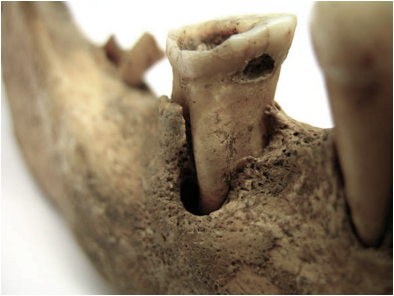
If early agrarian societies suffered from malnutrition and disease — as evidenced by dental caries, bone lesions, and skeletal pathology — that initial maladaptation would have exerted evolutionary pressure. Over 10,000 years, those pressures could favor alleles that improved tolerance to Neolithic foods like grains and dairy.
Populations with longer agricultural histories, such as those in the Fertile Crescent, would have had hundreds of generations to adapt. Populations with shorter agrarian histories — for instance, indigenous and aboriginal groups — may still exhibit greater sensitivity to post-agricultural foods, which could explain their higher incidence of autoimmune and metabolic diseases when exposed to Western diets.
The Genetic Geography of Adaptation
| Population Type | Historical Exposure | Likely Adaptation Level | Common Sensitivities |
|---|---|---|---|
| Fertile Crescent / Mediterranean | ~10,000 years | High | Fewer food intolerances |
| Northern European | 6,000–8,000 years | Moderate | Variable dairy tolerance |
| East Asian | 5,000–7,000 years | Moderate | Soy and rice tolerance, lower dairy tolerance |
| Indigenous / Aboriginal | <1,000 years | Low | High rates of metabolic and autoimmune disorders |
This framework aligns with modern genetic and anthropological evidence, including lactase persistence (a clear adaptation to dairy) and amylase gene copy-number variation (adaptation to starch consumption).
The Mediterranean Diet Paradox
The Mediterranean Diet is often hailed as the gold standard of nutrition. But what if its observed health benefits reflect not the diet’s inherent superiority, but rather the adaptation of its adherents? These populations have lived in the Cradle of Civilization — the birthplace of agriculture — for millennia. It’s plausible that their success with grain-based diets reflects genetic adaptation to Neolithic foods, not universal compatibility.
Why Evolutionary Thinking Still Matters
Dismissing the Paleo Diet as “bullshit” or claiming that “nobody has adapted to modern diets” misses the point. Both positions ignore the dynamic nature of evolution.
The Paleo Diet’s real value lies in its hypothesis-driven framework:
-
It helps us identify baseline human tolerances.
-
It invites self-experimentation to test adaptation.
-
It bridges anthropology, genetics, and nutrition science to improve public health.
In short, the Paleo Diet is less a prescription and more a tool for evolutionary inquiry.
Key Takeaways
-
Evolutionary principles support using the Paleo Diet as a testable health framework, not dogma.
-
Some human populations have adapted to post-agricultural diets through genetic selection.
-
Others remain maladapted, explaining variable responses to grains, legumes, and dairy.
-
The Paleo Diet provides a baseline for testing dietary tolerance and understanding adaptation.
-
Evolutionary nutrition offers an evidence-based bridge between anthropology and modern medicine.